The Evolving Landscape of Job Recruitment in Canada: Trends and Opportunities in 2025
Canada’s job market in 2025 presents a complex and shifting landscape, shaped by economic pressures, labor market realignments, and evolving recruitment strategies. While some headlines highlight a decline in job vacancies, the broader picture reveals both challenges and pockets of robust opportunity—especially for those with in-demand skills or a focus on upskilling and flexibility.
Job Vacancy Trends in 2025
Job vacancies have declined in early 2025, with the first quarter reporting approximately 524,300 open positions, down by over 116,000 (or 18.1%) from the previous year. This brings vacancies close to pre-pandemic norms, easing some of the overheated demand seen in recent years.
Despite this decline, total labor demand remains strong, driven by increased payroll employment and continued economic immigration.
Recent months have even shown gains; for example, June 2025 saw employment rise by 83,000 (+0.4%), with notable improvements in wholesale, retail, health care, and social assistance.
Sectors with High Demand
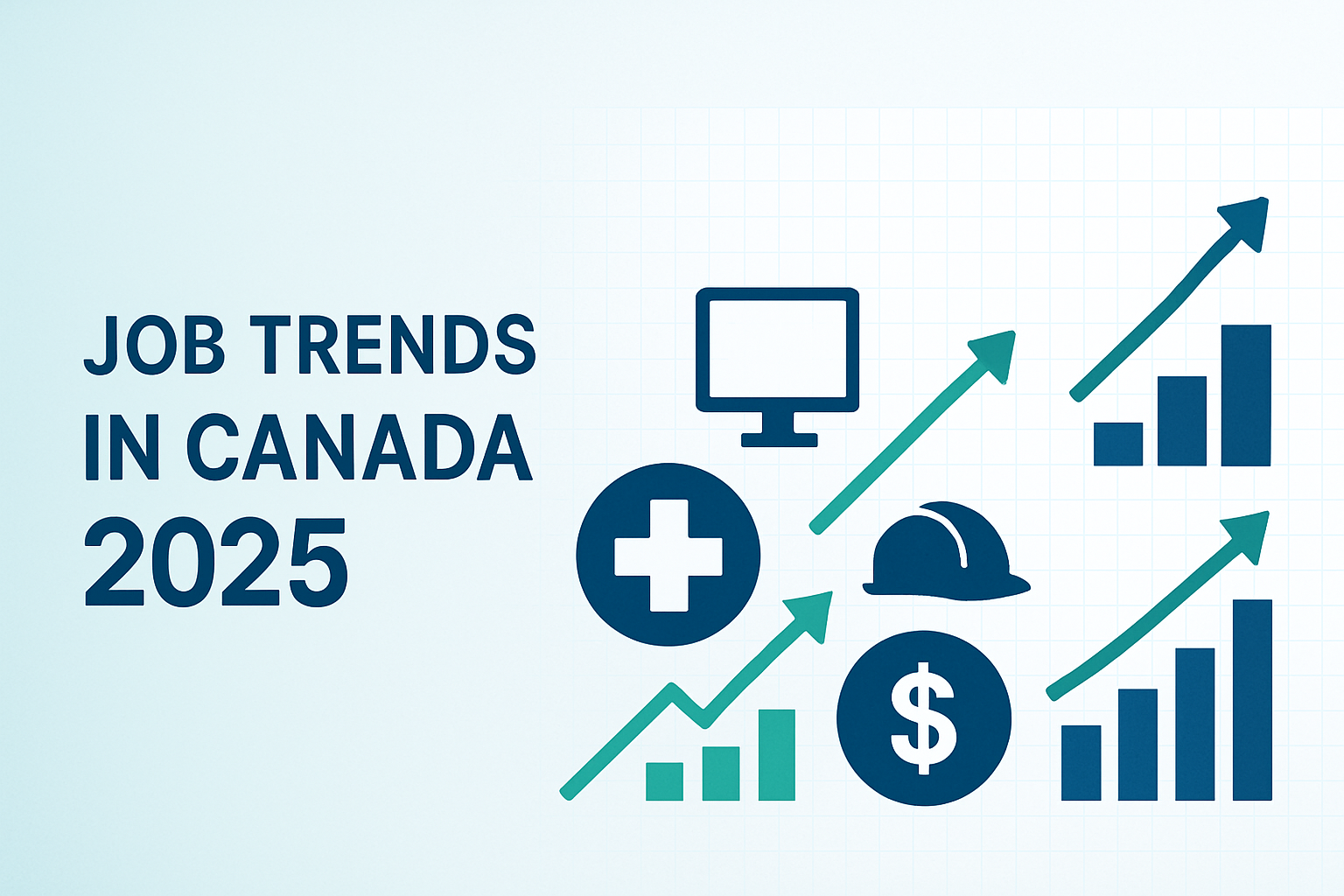
Certain fields continue to face chronic labor shortages and offer strong prospects:
Healthcare (Registered nurses, respiratory therapists, pharmacists, and medical specialists)
Technology (Web developers, cybersecurity analysts, data scientists, and programmers)
Construction and Skilled Trades (Civil engineers, electricians, concrete finishers, and plumbers)
Financial and Administrative Roles (Banking clerks, drafting technologists)
Logistics and Transport (Truck drivers, logistics coordinators)
A sample of the fastest-growing occupations in Q1 2025 includes police officers, therapy technicians, respiratory therapists, web developers, and banking clerks—many with vacancy increases of over 40%.
Regional Perspectives
Alberta, Quebec, Ontario, and Manitoba saw employment growth in June 2025.
Nova Scotia is a standout for opportunities in IT, healthcare, hospitality, and construction, buoyed by government infrastructure spending and population growth.
Unemployment and New Graduate Hurdles
The national unemployment rate sits at 6.9%, slightly higher than last year but showing signs of recent improvement.
Recent grads face particular challenges, with unemployment for those under 25 reaching 11.2% in Q1 of 2025, making this the toughest market for graduates in decades—impacted by slow economic recovery, interest rate effects, and trade tensions.
Recruitment and Workplace Trends
Hiring cycles remain lengthy: it takes employers an average of five weeks to fill an open position, and slow processes often result in losing top candidates.
There is rising demand for flexibility; 44% of professionals prefer hybrid work arrangements, and 37% of employers are responding with flexible work policies.
Organizations are prioritizing upskilling and reskilling, with 85% of employers planning to invest in workforce development, and 70% expecting to hire for new skill sets to address digital transformation and evolving business needs.
Wage Growth
Wages are rising steadily, with average weekly earnings up by 4.3% year-over-year, reflecting ongoing competition for top talent in key sectors.
What Job Seekers Should Know
Skills in health care, tech, skilled trades, and financial roles remain in strong demand.
Flexibility, digital proficiency, and continuous learning are highly valued by employers.
Despite a broader market slowdown, job seekers who target high-demand fields and regions with growth have the best prospect for success.
Graduates and newcomers may need to adjust expectations, take strategic steps in skill development, or consider positions in emerging or underserved sectors for quicker entry into the workforce.